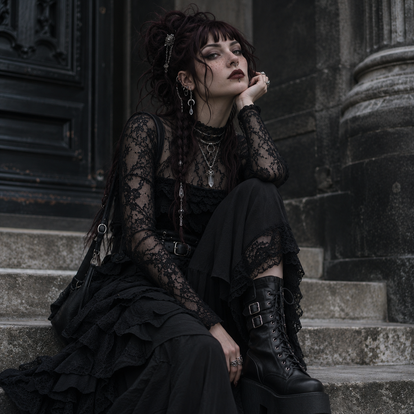
Gothic Underground is Horror-Shop's own world for those who see goth culture as something far more than simply wearing black.
Here, the cold melancholy of post-punk meets the raw edge of deathrock, the dark romanticism of Victorian goth and the diverse expressions of industrial and modern goth culture.
We don't believe everything black belongs under the same roof. Our collection brings together carefully selected clothing, jewellery and accessories that reflect the many facets of authentic goth culture.
Some of our products feature our own original designs, and we print our own T-shirt designs in Finland. The collection is complemented by carefully chosen pieces from other brands.
Whether you've spent decades in the shadows of goth clubs or have only recently found your place within the darker underground, Gothic Underground embraces the many ways this culture lives and evolves.
ENTER GOTHIC UNDERGROUN
The roots of goth culture can be traced back to the British post-punk scene of the late 1970s. Bands such as Bauhaus, Siouxsie and the Banshees, and The Cure shaped a musical world around which a distinctive subculture began to emerge. In the early 1980s, London's Batcave club became one of its most iconic gathering places.
Early goth fashion was characterised by dramatic eye makeup, teased hair, black lace, fishnet clothing, and a DIY ethos inherited from punk.
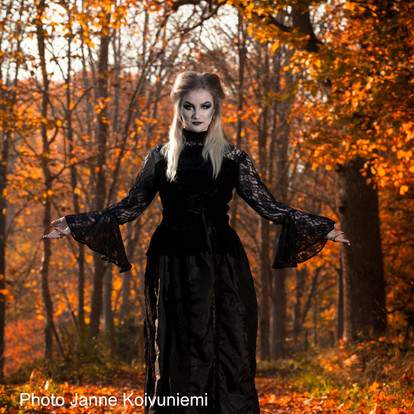
Over time, goth aesthetics also embraced influences from the Victorian era: long skirts, velvet, corsets, ornate jewellery, and dark romanticism. Victorian goth fashion is not the same as the original 1980s goth style, but both share a fascination with the beauty and melancholy of bygone eras.
The history of goth culture is a story of music, art, and fashion, continuously discovering new dimensions through their connections with one another over the decades.
In the early 1980s, something even darker emerged from the ashes of punk in Los Angeles. Bands such as Christian Death and 45 Grave combined punk's raw energy with horror film imagery, macabre lyrics, and theatrical performances. Deathrock became a distinctive chapter in the history of goth culture.
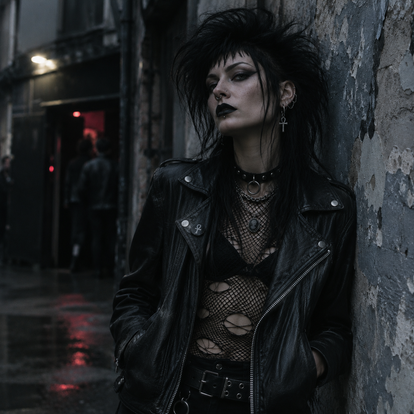
Its fashion was defined by torn fishnets, leather jackets, studs, dramatic makeup, and towering deathhawk hairstyles. The look was deliberately rough, often assembled by hand, and far removed from the polished world of mainstream fashion.
Meanwhile, in Europe, darkwave began to emerge from post-punk and the electronic influences of new wave. Cold synthesisers, echoing guitars, and melancholic atmospheres opened another path into the darker realms of goth culture.
Deathrock and darkwave may sound very different, but both reveal how the dark legacy of post-punk could evolve in countless directions. Their music and imagery continue to live on through new bands, underground clubs, and the fashion of the subculture.
In the late 1990s, a new futuristic style of dress began to emerge from the influences of goth culture, electronic club music, and industrial aesthetics. Cybergoth introduced neon colours alongside black, UV-reactive materials, and details inspired by dystopian science fiction.
The roots of industrial music, however, reach much further back, into the experimental music of the 1970s. Later on, electronic body music, or EBM, industrial dance, and other club music styles also had a strong influence on the rise of cybergoth.
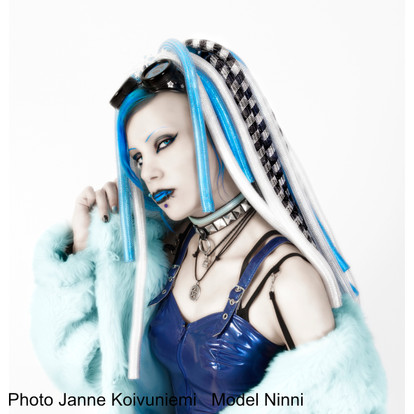
This style combines fishnet clothing, PVC, buckles, high platform shoes, and striking hair extensions. Black and vivid colours create a contrast that comes especially alive under the UV lighting of club environments.
Cybergoth shows that goth aesthetics do not have to remain tied to the past. Its world looks towards an imagined future where technology, music, and dark fashion come together.
Goth culture did not remain in the 1980s. Over the decades, its music, imagery, and fashion have evolved, branched out, and found new generations.
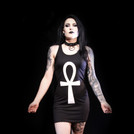
Modern goth and alt-goth draw inspiration from traditional goth aesthetics while incorporating elements of contemporary alternative fashion. Fishnet tops, graphic T-shirts, heavy boots, layered clothing, and striking jewellery can come together to create looks that give old influences new forms.
The internet and social media have introduced goth styles to an increasingly wider audience. At the same time, the debate over what constitutes authentic goth culture and what is merely dark fashion has taken on new dimensions.
Although outward appearances continue to change, music, community, and the history of the subculture still hold a special significance.
Perhaps this is the secret to the enduring nature of goth culture: its ability to evolve without completely losing touch with its roots.


© 2024 Wave